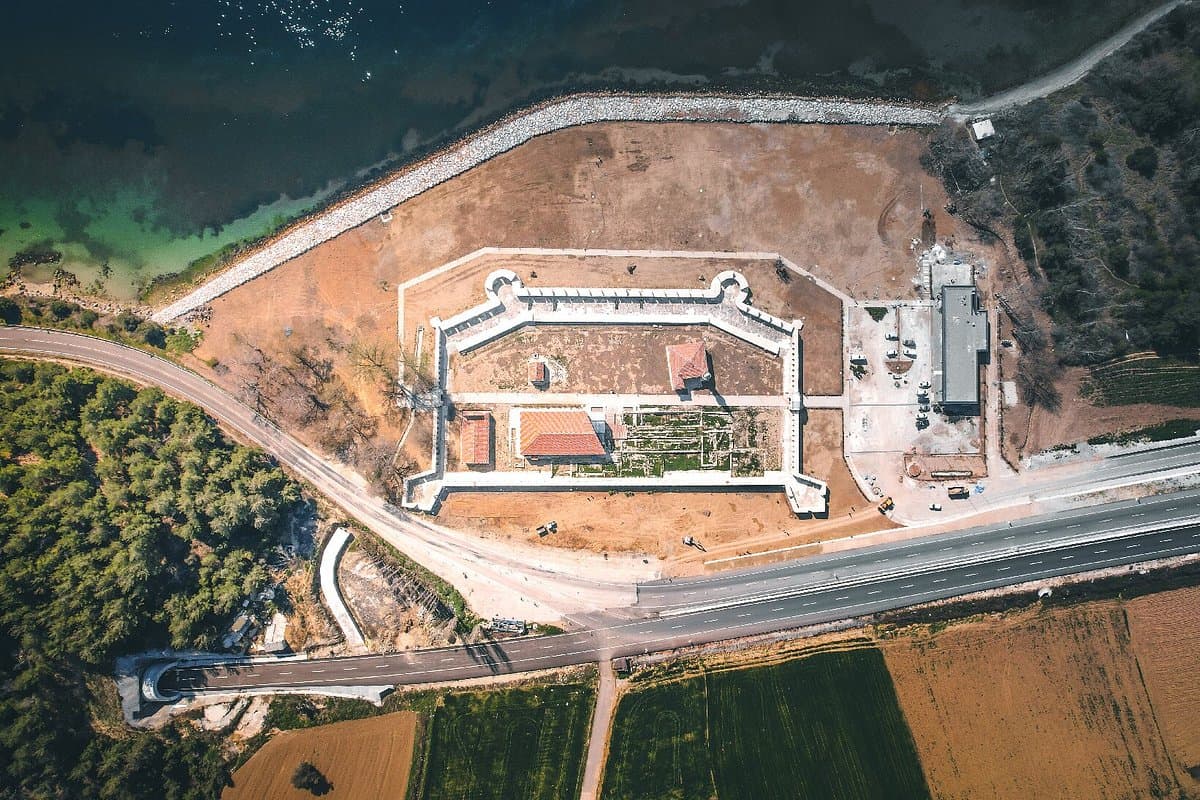
Bigali Castle, or Bigalı Kalesi, is a modest historical fortification located near the village of Bigalı, close to Çanakkale. Its primary significance lies in its historical role, particularly as a site associated with arms repair during conflicts, notably mentioned in connection with figures like Tufekçi Yusuf, an artisanal warrior. While not a grand, imposing structure, it offers a tangible link to the region's past and the ingenuity of its people during challenging times.
Visitors who have explored the castle often highlight its ability to evoke a sense of history, allowing one to imagine past events within its walls. The location also benefits from its proximity to the sea, providing fresh air and scenic views, which some reviewers find adds to the overall experience. However, it's important to manage expectations; the castle is small, and the visit is typically brief, focusing more on historical reflection than extensive exploration.
Given its size, visitors should plan to spend no more than 30 minutes to an hour at Bigali Castle. It is best visited as a quick stop if you are already in the vicinity, perhaps as part of a larger tour of the Çanakkale region. There are no specific recommendations for what to bring, but comfortable shoes are always advisable for exploring historical sites. As facilities are minimal, it's wise to bring your own water or snacks if needed.
The castle is situated approximately 5 km from Bigalı village, along the Edirne Çanakkale Yolu. Access is primarily by car or taxi, as public transport options directly to the castle are unlikely to be available. Travelers should use GPS or local directions to reach the site. Parking is generally informal and available near the castle entrance.
A common observation is the lack of extensive interpretive signage or visitor facilities, which can make it challenging for those unfamiliar with its specific history to fully appreciate its significance. To mitigate this, it is highly recommended to research the castle's history beforehand, especially its connection to Tufekçi Yusuf and its role in local conflicts, to enrich your visit.