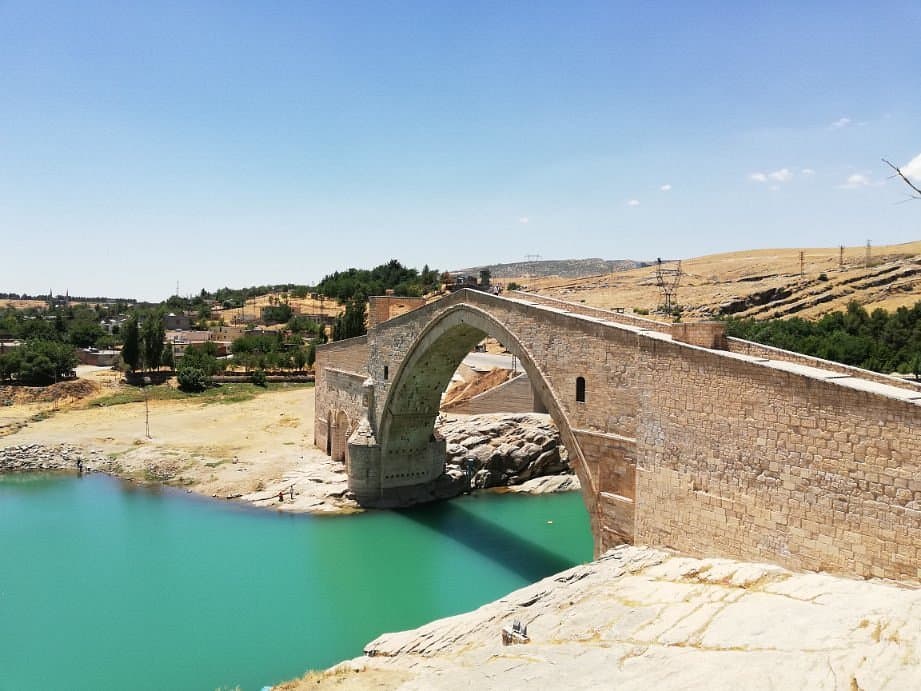
The Malabadi Bridge, constructed in 1147 during the Artukid period, stands as a remarkable example of medieval engineering and architecture. Registered in the inventory of historical monuments in Diyarbakır, this ancient arched bridge is considered one of the longest of its kind in the world. Its unique design, featuring carved decorations and a massive arch, offers a glimpse into the sophisticated construction techniques of its era.
Visitors consistently praise the bridge for its historical ambiance and the sense of stepping back in time. Many reviewers highlight the impressive scale and the well-preserved condition of the nearly 900-year-old structure. While some initially find the level of restoration surprising, understanding that the bridge likely appeared similarly pristine at its construction helps appreciate its enduring grandeur. The surrounding natural landscape, often featuring locals fishing in the river below, adds to the picturesque setting.
To fully appreciate the Malabadi Bridge, plan to spend about 1-2 hours exploring the structure and its surroundings. The best time to visit is during daylight hours, allowing for clear views and photography. There are no specific items to bring beyond standard travel essentials, but comfortable shoes are advisable for walking around the area. Visitors recommend combining a trip here with other sights in the Batman or Silvan region, as the bridge itself is a relatively quick visit.
Getting to the Malabadi Bridge can be a bit challenging, as several visitors note it's "a little bit hard to get to." It is located near Silvan, and while specific public transport options are not widely mentioned in reviews, it is generally accessible by car or taxi from nearby cities like Batman or Diyarbakır. There is no mention of dedicated parking, but the rural setting likely allows for roadside parking. It is advisable to arrange transportation in advance, especially if traveling from further afield.
A common observation is the bridge's somewhat remote location, which can make access difficult without private transport. To mitigate this, consider hiring a local driver or joining a guided tour that includes the bridge as part of a larger itinerary in the region. While the restoration work is extensive, it is generally seen as preserving the bridge's original grandeur rather than detracting from it, offering an authentic experience of its historical appearance.