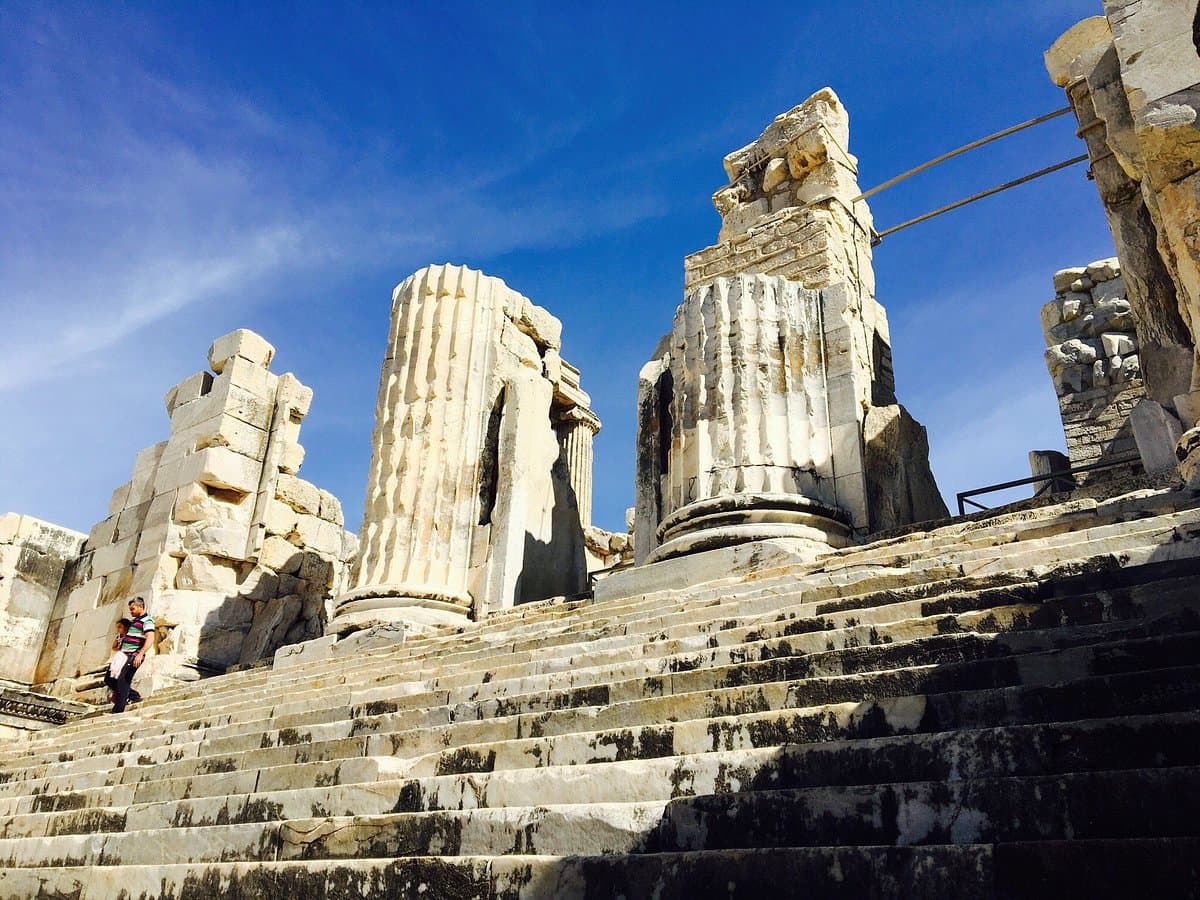
The Temple of Apollo in Didim, known in antiquity as Didyma, was one of the most important oracular centers of the ancient Greek world, second only to Delphi. Dedicated to the god Apollo, this colossal structure, though never fully completed, stands as a testament to the ambition and engineering prowess of ancient civilizations. Its sheer scale and the surviving architectural elements, including massive columns and intricate carvings, offer a profound glimpse into a bygone era.
Visitors consistently praise the temple's impressive size and the sense of history it evokes. Many are amazed by the remaining columns and the ability to imagine the temple in its full glory. Reviewers frequently highlight the opportunity to wander freely among the ruins, getting up close to the ancient stones and appreciating the intricate details. The site is often described as peaceful, especially when visited early in the morning, allowing for a more contemplative experience compared to more crowded ancient sites. Some visitors note the unique aspect of the temple's unfinished state, which allows for a rare insight into ancient construction techniques, including original blueprints still visible on some stones.
To make the most of your visit, consider arriving early in the morning, ideally before 9:00 AM, to avoid crowds and the midday heat, especially during summer. The site is very exposed, so bring a hat, sunscreen, and plenty of water. Comfortable, strong footwear is recommended for navigating the uneven terrain. While some visitors suggest you can see much from outside, paying the entrance fee is highly recommended for the full experience, allowing you to explore the interior and read the informative boards. Allow at least an hour, or up to two or three if you enjoy photography and reading all the historical details. If you have a Turkish Museum Card (Müzekart), admission is free.
The Temple of Apollo is conveniently located within the town of Didim. Many visitors reach it by local dolmuş (minibus) services; for instance, dolmuş number 4 from near the Duja Didim hotel will take you within a 10-minute walk of the temple. Taxis are also readily available and reasonably priced from nearby areas like Altinkum. If driving, parking is generally easy to find nearby. The site is well-integrated into the town, with numerous shops, cafes, and restaurants directly opposite the entrance, offering refreshments and meals.
A common complaint among visitors is the lack of extensive signage or detailed information on-site, with some wishing for more context. To mitigate this, consider reading up on the temple's history beforehand or using a reliable online guide. While the site is generally well-maintained, some reviewers have noted occasional graffiti on older stones, which is a minor detraction from the historical ambiance. Be aware that while prices might be displayed in Euros at some local establishments, Turkish Lira or card payments are generally preferred for entry fees and purchases.