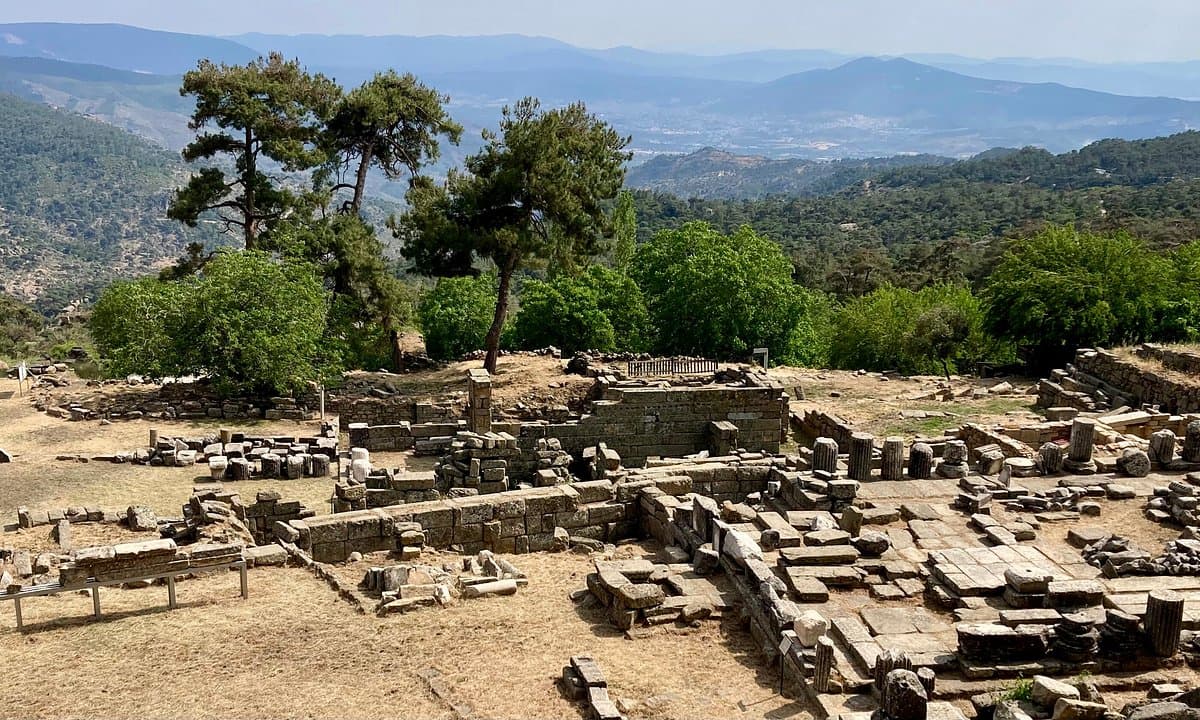
Labranda is not merely an ancient city, but rather a significant ancient pilgrimage site dedicated to Zeus Labraundos, dating back to Carian and Hellenistic periods. It served as a sacred sanctuary where people would journey, often annually, to worship. The site features impressive remains including the Temple of Zeus Labraundos, three androns, a hamam, stoas, and a propylon, showcasing the architectural prowess of its time and offering a glimpse into ancient religious practices.
Visitors consistently praise the site for its tranquil atmosphere and stunning panoramic views of the valley below, often noting the absence of large tour groups. Many appreciate the ongoing restoration work by Swedish archaeologists, which has helped preserve the ruins and provide informative signage in both Turkish and English. The relatively compact size of the site is also frequently mentioned, allowing for a thorough exploration without feeling overwhelmed. Reviewers highlight the unique experience of being immersed in history in such a peaceful, natural setting.
To make the most of your visit, allocate at least 1.5 to 2 hours for exploration. Wear comfortable shoes suitable for uneven terrain, as the site is hilly. Bringing water, especially during warmer months, is advisable, as amenities are limited. Several visitors suggest doing some research on the site's history beforehand to enhance the experience, as the context enriches the ruins. The best time to visit is in the morning or late afternoon to avoid the midday sun and enjoy softer light for photography.
Reaching Labranda requires some effort. It is located approximately 14 km northeast of Milas (ancient Mylasa). The road from Milas is generally signed, but visitors warn that the last section can be narrow, winding, and shared with large quarry trucks. While the first 8 km from Milas are reported to be good, the remainder can be poorer, and some sections might be unpaved or damaged, especially if approaching from Ortaköy. A standard 2-wheel drive car might struggle on certain stretches. It is highly recommended to rent a car or arrange a taxi for access, as public transport is not available. Parking is typically by the side of the road near the entrance. The journey itself, winding through pine forests, is often described as scenic.
The primary complaint among visitors is the challenging road conditions, particularly the presence of quarry trucks and the variable quality of the road surface. To mitigate this, consider visiting early in the morning when truck traffic might be lighter, or ensure your vehicle is suitable for potentially rough terrain. Some reviewers also noted the site can feel small if not combined with other attractions, so consider pairing it with a visit to Milas or other nearby ancient sites like Euromos or Iasos for a full day trip.