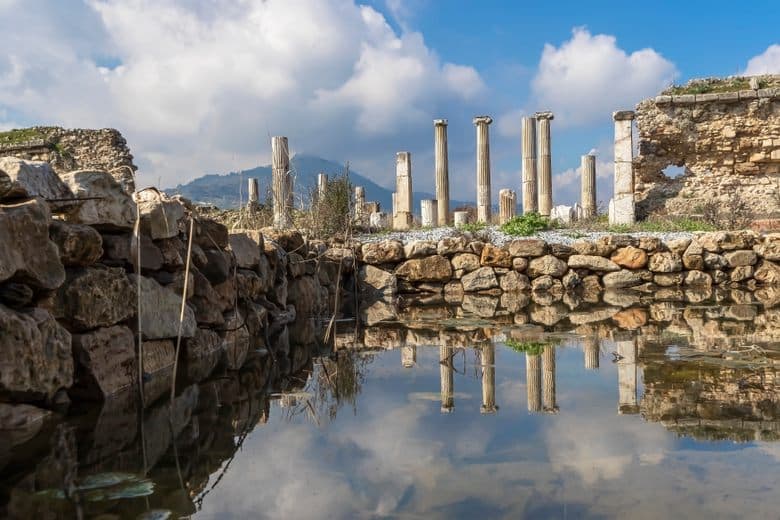
The Ancient City of Magnesia, nestled in the fertile plains of Ionia, was a strategically important commercial hub during the Hellenistic and Roman periods, particularly flourishing under Alexander the Great. Situated between the major cities of Ephesus, Priene, and Tralleis, it was renowned for its agricultural produce, especially grains and figs. Today, it stands as an archaeological site offering a fascinating glimpse into ancient urban life, featuring well-preserved structures designed by the famous architect Hermogenes.
Visitors consistently praise the site for its impressive stadium, which once accommodated 30,000 spectators and is considered one of the best-preserved ancient stadiums. The remains of the Temple of Artemis, the fourth-largest Ionian temple known, also draw significant attention, with its unique roof openings believed to have aligned with moonlight to illuminate a statue of the goddess. Reviewers often highlight the sense of tranquility and fewer crowds compared to more famous sites, allowing for a more immersive exploration of the ruins, which include an agora, a temple to Zeus, an emperor's chamber, latrines, a library, baths, a gymnasium, and a theater.
To make the most of your visit, allocate at least 1.5 to 2 hours to comfortably explore the main structures. Bringing water, especially during warmer months, is highly recommended as the site is open-air with limited shade. Comfortable walking shoes are essential due to uneven terrain. Many visitors suggest combining a trip to Magnesia with a visit to nearby Ephesus, as it offers a different perspective on ancient Ionian cities. The best time to visit is in the morning or late afternoon to avoid the midday heat and harsh sunlight, which is also ideal for photography.
The Ancient City of Magnesia is located in Tekin Village, Germencik district, Aydın, Turkey. It's approximately a 30-minute drive from Ephesus, making a rental car or taxi the most convenient way to reach the site. While public transport options directly to the site might be limited, local dolmuş (shared minibuses) could be an option to Germencik, from where a taxi would be needed. Parking is generally available near the entrance.
A common complaint among visitors is the lack of extensive signage or detailed information boards at some parts of the site, which can make it challenging to fully understand the purpose of every ruin. To mitigate this, consider researching the site beforehand or bringing a guidebook. Some visitors also note that the stadium, while impressive, requires asking at the information center for access, so be prepared to do so upon arrival.