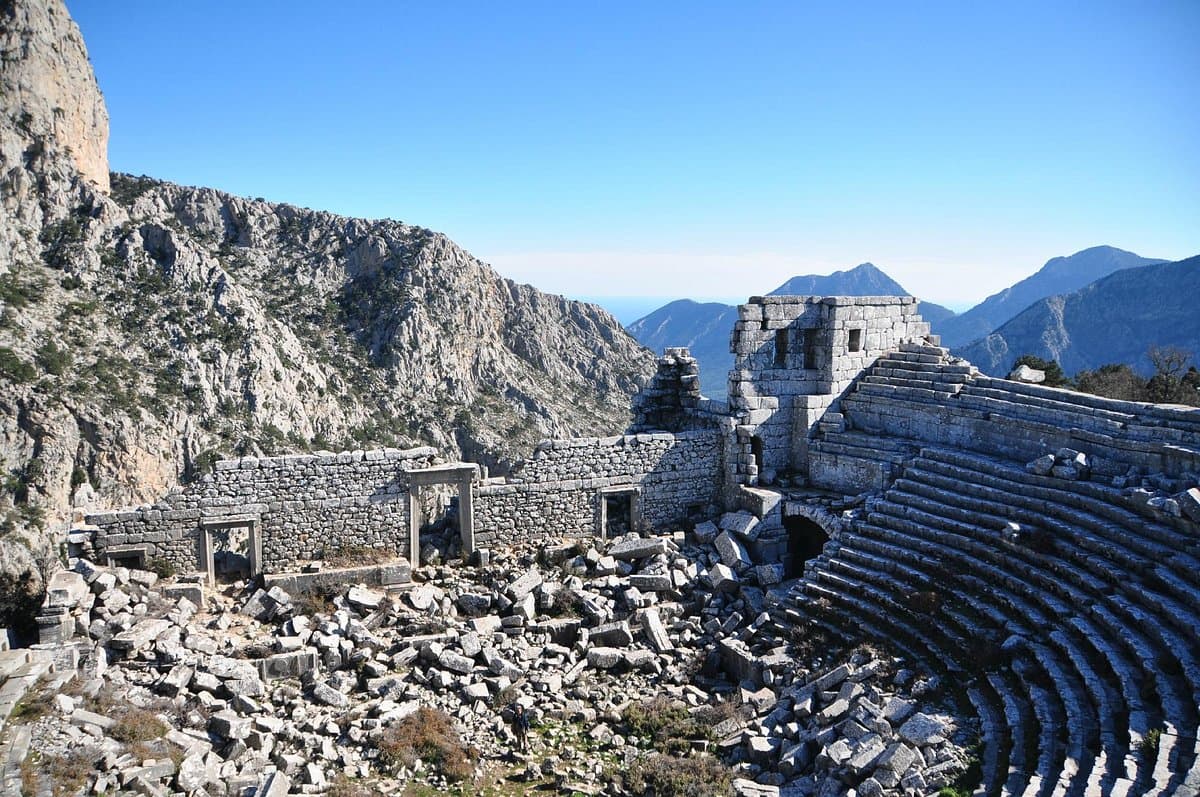
Termessos, often called the "Eagle's Nest," is a remarkably preserved ancient Pisidian city nestled over 1,000 meters high in the Güllük Mountain National Park. Its historical significance is underscored by its successful resistance against Alexander the Great, making it a unique site among ancient cities. Unlike many other archaeological sites, Termessos remains largely unrestored and unexcavated, offering visitors an authentic and immersive experience of ruins reclaimed by nature.
Visitors consistently praise the site for its stunning natural beauty, the sense of exploration it offers, and the breathtaking views, especially from the amphitheater. Many describe it as a magical place where history and nature merge seamlessly. The lack of crowds, particularly in the early morning or off-season, is frequently highlighted as a major advantage, allowing for a more personal and reflective experience. The journey to the ruins, involving a significant hike, is often considered part of the adventure, with the reward being the spectacular scenery and the feeling of discovering a hidden gem. Reviewers often note the well-preserved state of the amphitheater, the necropolis with its sarcophagi, and the overall atmospheric quality of the site.
To make the most of your visit, wear sturdy, closed-toe shoes with good grip, as the paths are rocky, uneven, and can be slippery. Bring plenty of water (at least 1-2 liters per person), snacks, and sunscreen, as there are no facilities to purchase these items on-site. Many recommend going early in the morning to avoid the heat, especially during summer, and to experience the site in relative solitude. Allow at least 3-4 hours to explore the main areas, with some visitors spending up to 5-6 hours to delve deeper into the extensive ruins. The site is not suitable for young children (under 9-10 years old), those with mobility issues, or strollers due to the challenging terrain.
Termessos is located approximately 30-35 km northwest of Antalya city center. While the initial 9 km drive from the national park entrance to the parking lot is on a winding but paved road, reaching the ruins from the parking area requires a significant uphill hike. Public transport options are limited and involve multiple transfers and a long walk. Visitors often suggest renting a car for flexibility or hiring a taxi from Antalya, agreeing on a waiting time and price beforehand. Some tour operators also offer guided trips. The nearest public transport drop-off points (like Termessos junction or Dosemealti village) still leave you with a long walk (8-9 km) to the ticket office and then the subsequent hike.
A common complaint revolves around the physical demands of the hike, with some visitors finding it more challenging than anticipated, especially in hot weather. To mitigate this, ensure you are reasonably fit, wear appropriate footwear, and carry sufficient water. The lack of extensive signage or detailed maps within the ruins can also be a minor issue for some, so it's advisable to read up on the site's history beforehand and perhaps download an offline map or guide. While the unrestored nature is a major draw for many, a few visitors accustomed to highly reconstructed sites found it difficult to visualize the ancient city's layout. Embrace the wild, natural state of the ruins for the best experience.