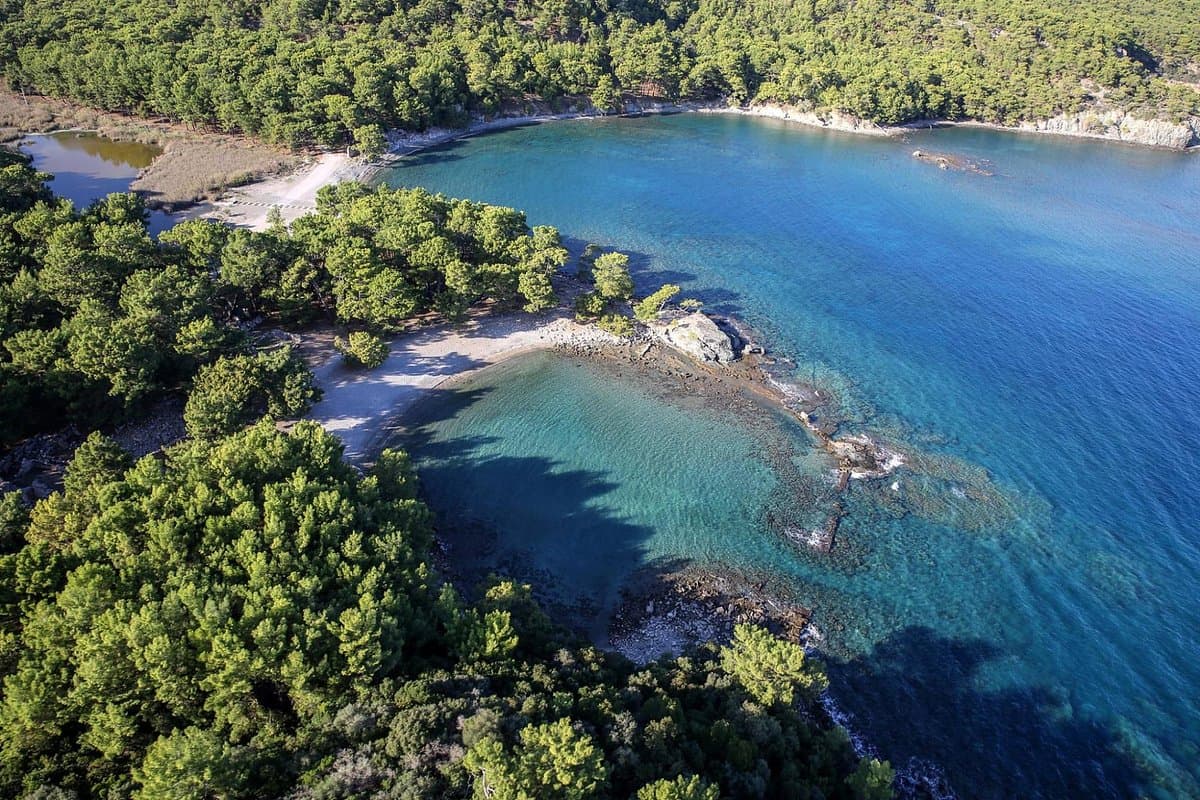
Phaselis Bay is a historically significant ancient city and a natural wonder, strategically located between three natural harbors. Founded in the 7th century BC, it served as a vital port city for Lycia, thriving through Hellenistic, Roman, and Byzantine periods. Today, it offers a unique opportunity to explore well-preserved ruins, including an amphitheater, aqueduct, Roman baths, and Hadrian's Gate, all set against a backdrop of stunning Mediterranean scenery.
Visitors consistently praise the site's dual appeal: the rich historical context and the beautiful, swimmable bays. Many reviewers highlight the joy of combining exploration of ancient ruins with relaxing on the beach or swimming in the clear waters. The natural beauty, with pine trees providing shade and views of the Taurus Mountains, is frequently mentioned as a major draw. Families with children particularly appreciate the shallow, calm waters of the bays. The ongoing archaeological excavations are also noted, adding to the sense of discovery.
To make the most of your visit, plan to spend 3-4 hours exploring the ruins and enjoying the beaches. Many suggest bringing your own picnic, snacks, and drinks, as on-site options can be limited or expensive. Don't forget essentials like sunscreen, a hat, a towel, and comfortable shoes for walking among the ruins. Snorkeling gear is also recommended for exploring the underwater life in the clear bays. Going early in the morning or later in the afternoon is advised to avoid crowds, especially on weekends, and to enjoy cooler temperatures. While there are toilets and changing cabins, some visitors note they can be poorly maintained, so be prepared.
Phaselis Bay is accessible by various means. From Kemer, you can take a local dolmuş (minibus) which drops you off at the entrance gate. The ride takes approximately 15-20 minutes and is very affordable. From the main road, it's about a 1-2 km walk through a forest to reach the ruins and beaches. Taxis are also an option, with many visitors arranging round-trip fares with their hotels. For those driving, there is parking available, though it can get chaotic and crowded on busy days. Some visitors also arrive as part of boat tours from nearby coastal towns, which often include swimming stops in the bays.
A common complaint among visitors is the entrance fee, which many find expensive, especially compared to other historical sites in the region. There are also frequent reports of rude staff at the entrance, particularly regarding payment methods, with some stating only Turkish Lira or card is accepted despite signs indicating Euro prices. To mitigate this, ensure you have sufficient Turkish Lira or a credit card. Another recurring issue is the cleanliness of some areas, particularly the beaches and facilities, with plastic waste sometimes noted. While excavations are ongoing, some visitors feel there's a lack of clear signage and information about the ruins. It's advisable to read up on the history beforehand or consider hiring a guide if you want a deeper understanding of the site.