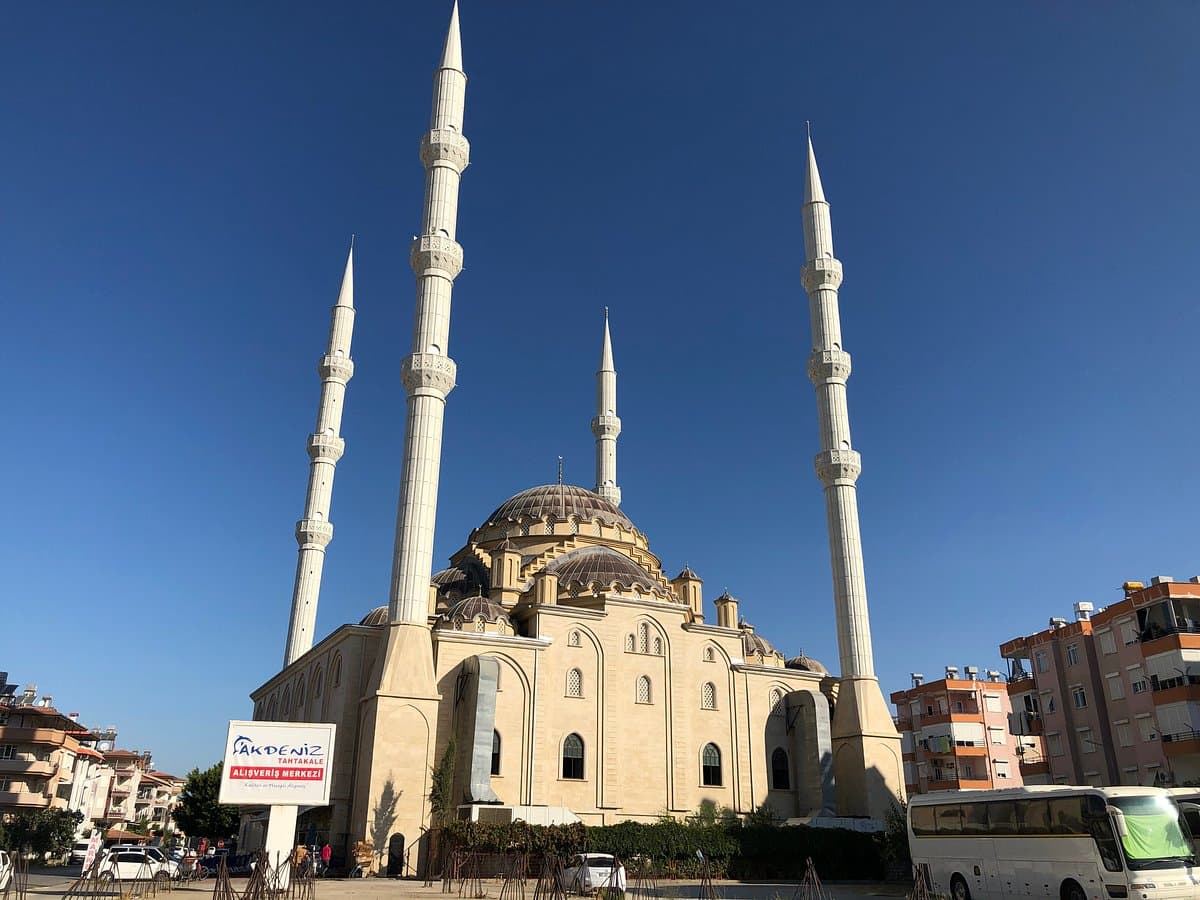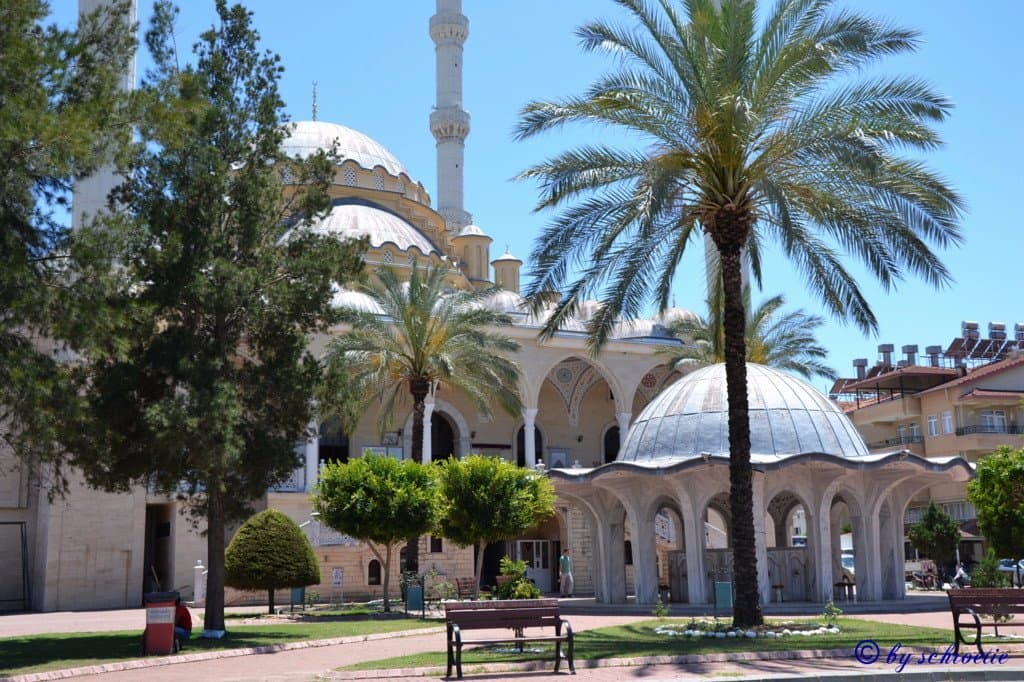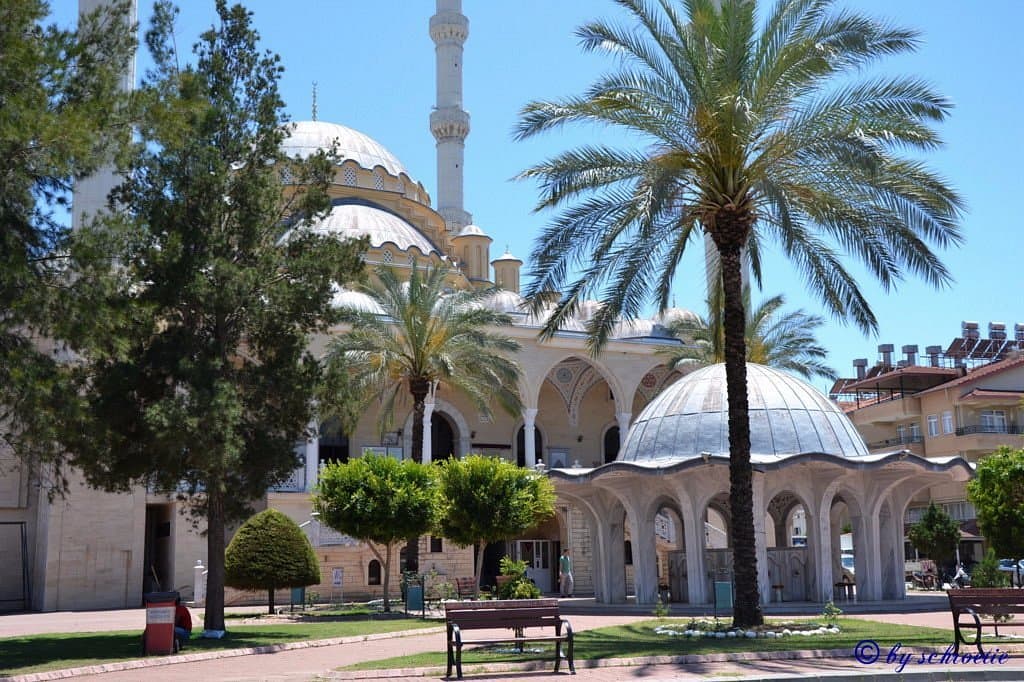
The Manavgat Mosque is a relatively modern, yet grand and beautifully adorned place of worship, often noted for its resemblance to Istanbul's iconic Blue Mosque. Opened in 2004, its impressive scale, with a 30-meter high main dome and four 60-meter minarets, makes it a prominent landmark visible from afar, particularly along the Manavgat River. It serves as an active mosque while also welcoming tourists to appreciate its architectural and artistic splendor.
Visitors consistently praise the mosque's stunning interior, highlighting the intricate painted patterns, beautiful thick carpets, Iznik tiles decorating the pillars, and ceiling decorations that imitate mosaics. Many describe the atmosphere as very peaceful and serene, making it a haven for quiet contemplation. Reviewers frequently mention the mosque's friendly approach to tourists, often providing headscarves and long skirts for women who need them to comply with dress codes. The ablution space is also noted for its beauty, adding to the overall aesthetic experience.
To ensure a respectful and enjoyable visit, it is crucial to dress modestly. Women must cover their heads, arms, and legs, while men should wear long trousers. The mosque provides coverings for women if needed. Visitors must remove their shoes before entering; wipes are sometimes offered for wheelchair users to clean tires. It is advisable to avoid prayer times out of respect for worshippers. Most visitors find that 30 minutes to an hour is sufficient to explore the interior and appreciate the architecture. There is a supermarket next door for refreshments, which some visitors found convenient.
The mosque is located in the Örnek neighborhood, near the Manavgat River, and is easily accessible within the city center. While specific public transport lines are not frequently mentioned in reviews, its central location suggests it can be reached by local buses or taxis. Many visitors come as part of organized day tours, which often include transport. If driving, parking options in the city center should be considered.
A common complaint among some visitors, particularly Muslim women needing to perform ablution, is the charge for using the toilets. While this is not universally reported, it is worth being aware that facilities might incur a small fee. To mitigate this, visitors can plan their visit accordingly or carry small change. Despite this, the overall sentiment remains highly positive, with the beauty and peacefulness of the mosque outweighing minor inconveniences.