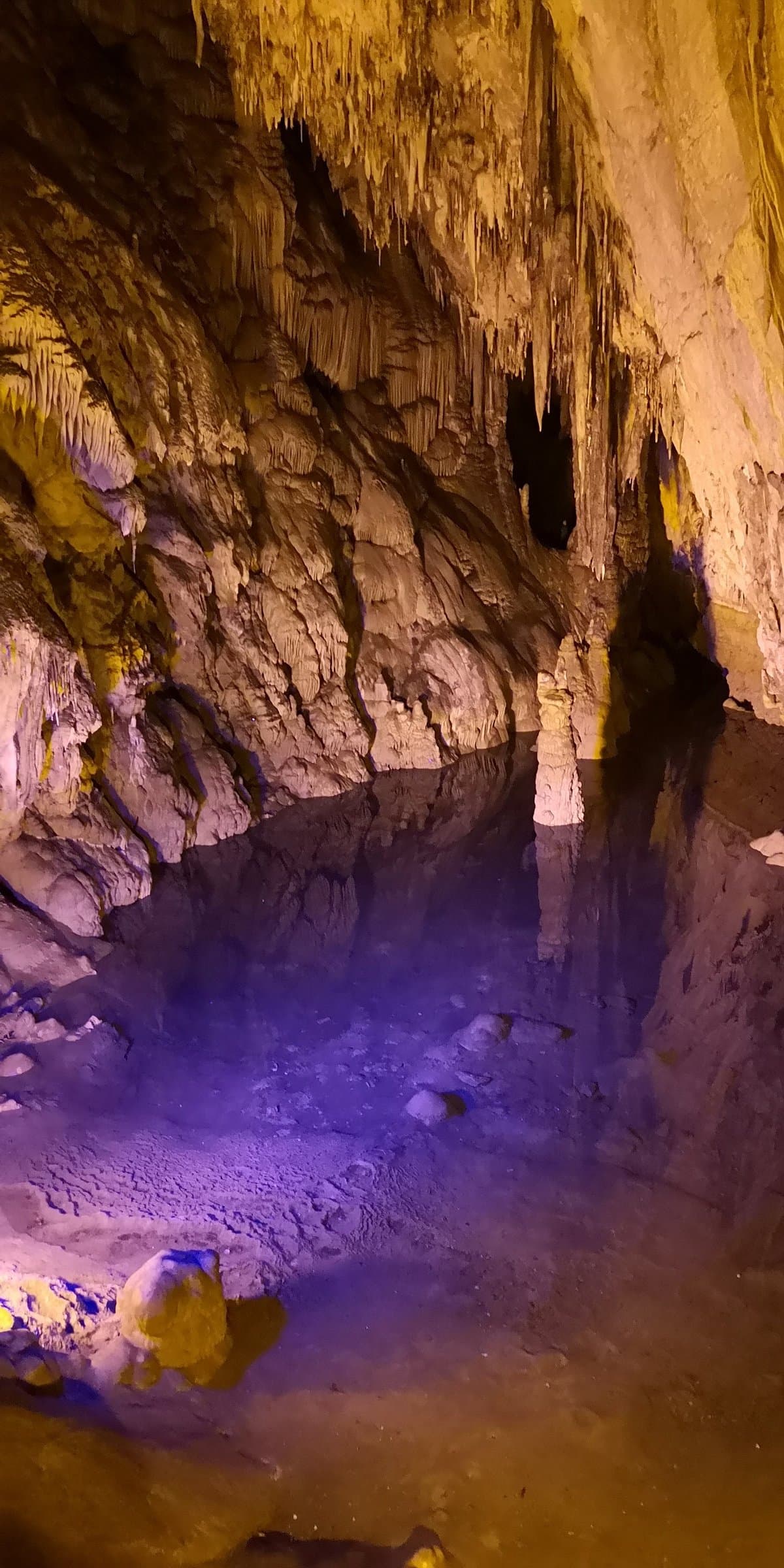
What this place is: Dim Cave (Dim Mağarası) is the largest limestone cave system in the Alanya region, located approximately 13–15 km inland from the coast at an elevation of 232 metres on the western slope of Cebeli Reis Mountain. The cave features over 300 metres of illuminated walkways descending through chambers filled with stalactites, stalagmites, and other mineral formations, culminating in a small underground lake. The interior maintains a constant temperature of 18–22°C, significantly cooler than the surrounding landscape, making it a popular refuge during Alanya's hot summers.
What visitors consistently praise: Reviewers highlight the impressive scale and beauty of the mineral formations, describing them as resembling art sculptures. The atmospheric lighting system effectively showcases the cave's features without overwhelming the natural environment. The low entry fee (typically 60–80 Turkish lira, or approximately €2–3) is repeatedly noted as exceptional value. Many visitors appreciate the cave as a welcome break from beach tourism, offering a different experience within a short drive from Alanya. The site is well-maintained, with clean facilities and a small café at the entrance offering refreshments and mountain views. Several reviewers mention that visiting early morning (before 9 a.m.) provides a near-solitary experience, as tour buses typically begin arriving around 10 a.m., transforming the narrow passages into crowded queues.
Common challenges and what to expect: The cave requires significant physical effort. Visitors must climb numerous steep stairs both outside (ascending from the car park to the entrance) and inside the cave itself, with steps of varying heights and some metal sections that can become slippery due to high humidity (98% reported). The narrow passages and steep descents are unsuitable for people with mobility issues, claustrophobia, or respiratory problems—though some reviewers note the humid air may benefit those with certain respiratory conditions. The lighting, while atmospheric, does not fully illuminate all steps, requiring careful footing. During peak season (July–August) and midday hours, the cave becomes extremely crowded, with visitors describing bottlenecks and difficulty moving through passages. Reviewers advise against visiting in flip-flops or unsuitable footwear; non-slip trainers or hiking boots are essential. The handrails, particularly during hot weather, become slick with sweat and condensation.
Practical advice from visitor experience: Arrive before 9 a.m. to experience the cave with minimal crowds and better lighting conditions for photography. Plan to spend 1–1.5 hours total (including the approach, cave exploration, and café break). Wear sturdy, non-slip footwear with good ankle support—many reviewers emphasise this as critical. Bring light clothing; despite the cool interior, the climb and humidity create a warm, damp environment. The two route options (a short 50-metre path and a longer 310-metre route) allow flexibility; visitors with limited time or fitness can complete the shorter route in 20–30 minutes. A guide is not provided, but the marked paths are straightforward. Photography is permitted; use flash carefully to avoid disturbing other visitors. The café at the entrance offers reasonably priced drinks and snacks; some reviewers recommend timing a visit to coincide with the café's operating hours for a post-cave rest. Bring anti-bacterial wipes if you are sensitive to the humid environment or concerned about handrail hygiene.
Getting there: The cave is located 13–15 km inland from Alanya town centre. By car (recommended): Follow signs from Alanya towards Dim Çayı (Dim River). The final approach involves a winding mountain road with narrow sections and steep drops; several reviewers warn that Google Maps may direct you onto an unpaved, loose-gravel road—verify the route before departure or ask locally. Parking is available at the cave entrance (5 Turkish lira). By public transport: Bus No. 10 from Alanya town centre reaches Dim Çayı (cost approximately 11 Turkish lira), but from the bus stop you must take a taxi to the cave entrance (approximately 150 Turkish lira one way). Taxis will typically wait for 1–2 hours while you visit, costing around £26 (approximately 500 Turkish lira) for the round trip with waiting time. Some visitors report hiring a scooter or bicycle as an alternative, though the steep mountain road makes this challenging. The walk from the bus stop to the cave takes approximately 2 hours uphill and is not recommended in summer heat.
Common complaints and mitigation: Overcrowding during peak hours (10 a.m.–4 p.m., especially July–August) is the most frequent complaint, with visitors describing congested passages and difficulty photographing formations. Mitigation: visit before 9 a.m. or after 5 p.m. Some reviewers note that the cave is smaller than expected based on photographs or comparisons to other cave systems (e.g., Zeus Cave in Crete); this is subjective and depends on prior cave experience. A minority of visitors report that staff behaviour was occasionally inappropriate or that the cave entrance fee structure is unclear (some sources cite different prices, possibly due to discounts or bundled tickets with nearby attractions like Red Tower). Verify current pricing at the entrance or with your hotel. Visitors with respiratory conditions should be aware that the humid environment, while potentially beneficial for some, may trigger symptoms in others; consult medical advice before visiting if you have asthma or similar conditions.