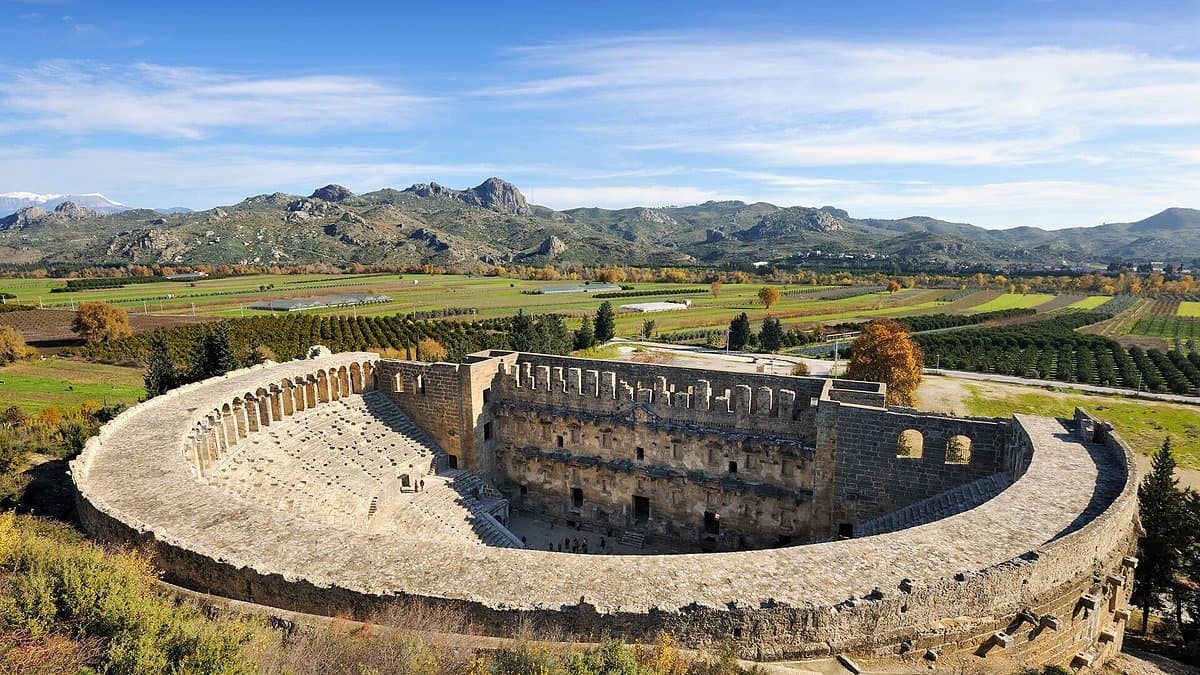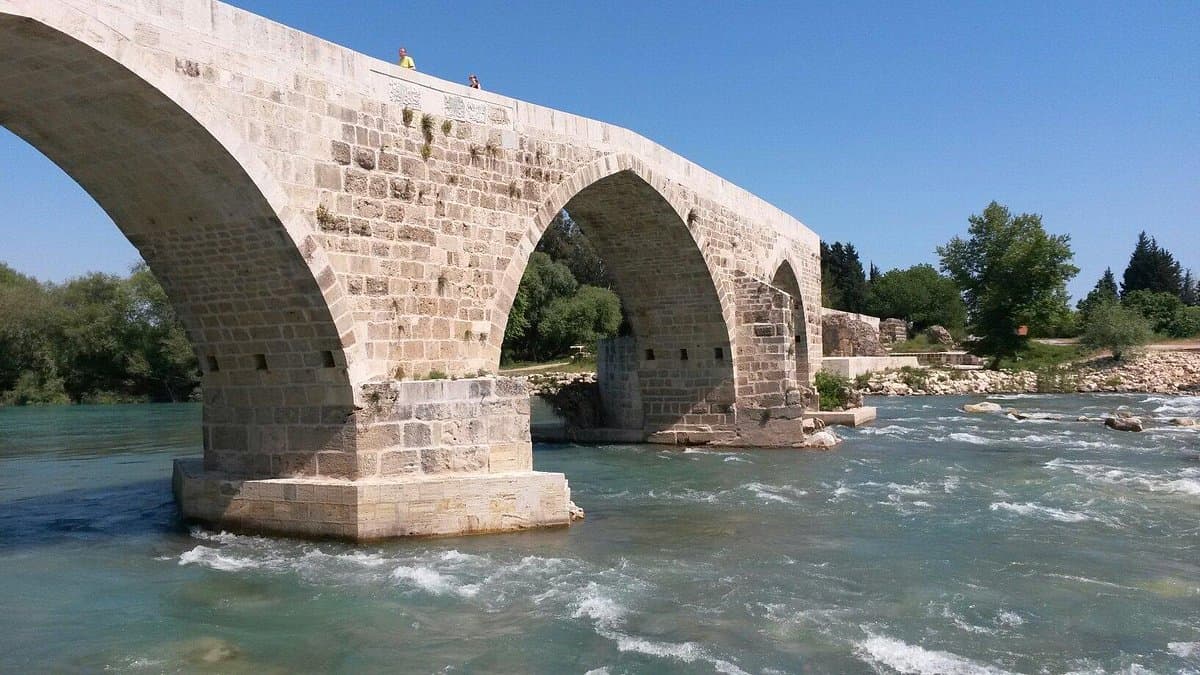
The Aspendos Bridge, or Eurymedon Bridge, is a remarkable testament to ancient engineering and continuous use. Originally a Roman structure, it was significantly rebuilt by the Seljuks in the 13th century, incorporating many of the original Roman blocks. Today, it stands as a functional bridge, carrying traffic over the Manavgat River, and serves as a historical gateway to the nearby Aspendos Ancient Theatre.
Visitors consistently praise the bridge's historical significance and its picturesque setting, especially the vibrant green color of the river below. Many reviewers highlight the opportunity for excellent photographs, particularly at sunset. The blend of Roman and Seljuk architecture is a point of interest for those with an appreciation for history. However, a recurring theme in reviews is that the bridge itself, while interesting, is not a destination that warrants a dedicated trip. It is best experienced as a brief stop, typically for 10-15 minutes, as part of a larger tour that includes the Aspendos Ancient Theatre or other local sites.
For the best experience, consider visiting in the late afternoon to capture the sunset. Bring a camera to take advantage of the scenic views. While there are often local vendors selling souvenirs and fresh pomegranate juice, be prepared for potential tourist traps. Several visitors recommend reading up on the bridge's history beforehand to fully appreciate its significance, as on-site explanations can be limited. It's also advisable to keep an eye on children, as the bridge's sides are not very high.
The Aspendos Bridge is located in Belkıs, on the road to the Aspendos Ancient Theatre from the main coastal road. There is a small brown sign indicating its location. Visitors often reach it by car or as part of organized bus tours. Parking is available nearby, allowing for a quick stop and photo opportunity. Some reviewers mention that it's easily spotted from a distance when approaching the area.
A common complaint among visitors is the extent of modern restoration, with some feeling it detracts from the bridge's ancient character, making it appear too new or even like a replica. Others mention graffiti on the bridge. To mitigate this, focus on the overall historical context and the impressive feat of engineering that allowed it to stand for centuries, rather than scrutinizing every stone. While some vendors can be persistent, a polite refusal is usually sufficient.