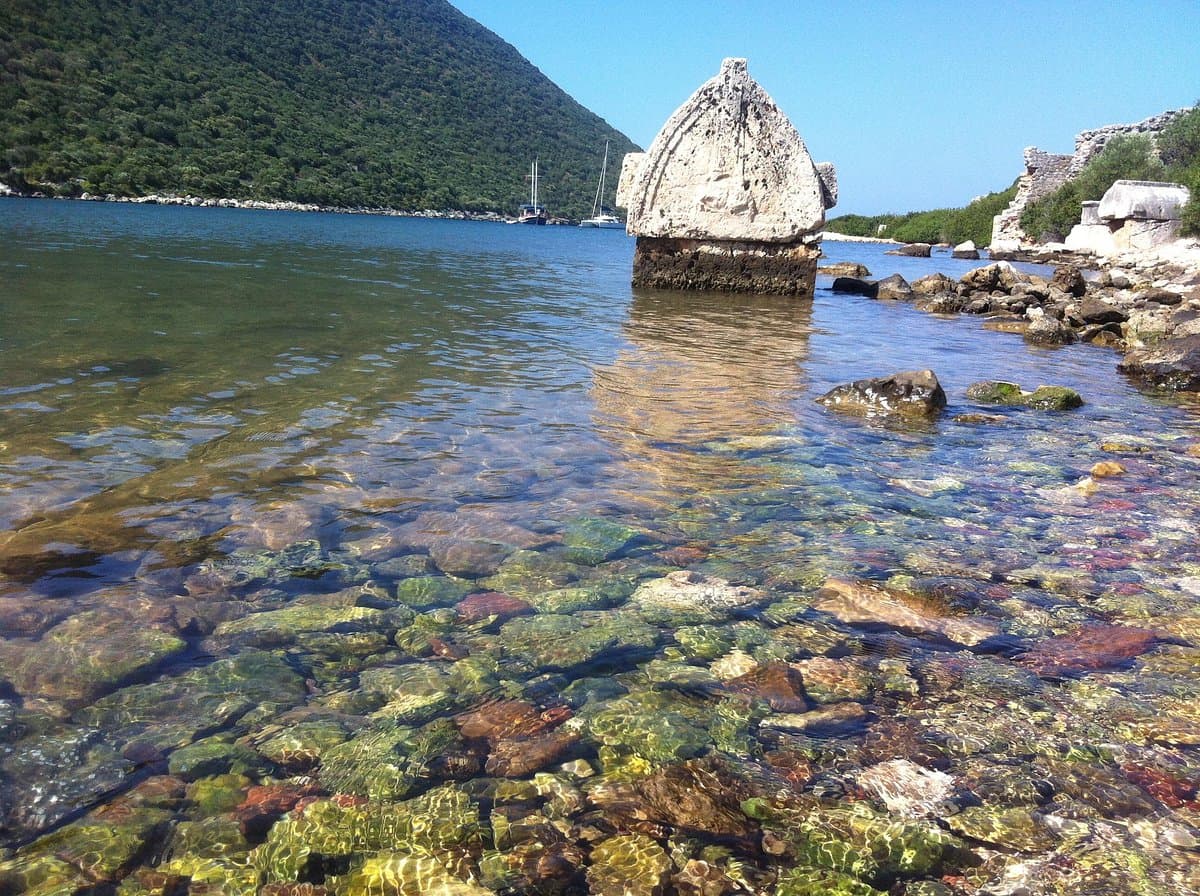
Aperlai Ancient City is a significant Lycian settlement, dating back nearly 4000 years, renowned for its partially submerged ruins. Unlike many ancient sites, a substantial portion of Aperlai lies beneath the clear waters of the Mediterranean, offering a rare glimpse into an underwater archaeological landscape. Its remote location, accessible primarily by boat or a scenic hike, adds to its allure as a destination for adventurous travelers seeking a blend of history and natural beauty.
Visitors consistently praise the unique experience of swimming and snorkeling among the sunken ruins, particularly the tombs and foundations visible just below the surface. Many reviewers highlight the clarity and warmth of the water, making it an ideal spot for underwater exploration. The land-based ruins, though less extensive than some larger sites, are appreciated for their historical context and the picturesque setting. Reviewers often mention combining their visit with a boat trip, which allows for exploration of the Kekova Sound and other nearby attractions, enhancing the overall experience.
To make the most of your visit, bring snorkeling gear, as this is a key activity. Comfortable walking shoes are essential if you plan to hike the Lycian Way to reach the site, as the terrain can be stony and dusty. Sun protection, including a hat and sunscreen, is crucial, especially during warmer months, as shade is limited. Many visitors recommend allocating at least 2-3 hours to fully appreciate both the land and underwater ruins, allowing time for swimming and exploration. Early spring or late autumn are suggested as the best times to visit to avoid the intense summer heat.
Aperlai is best accessed by boat as part of a tour from Kaş or Üçağız/Kekova, which often includes other stops like the Sunken City of Kekova. Alternatively, adventurous hikers can reach Aperlai via the Lycian Way. Reviewers describe a 20-minute to 2-hour walk from various drop-off points, such as Polemos Bay or Apollonia ruins. The path is generally considered easy, though rocky in parts, and signs are present for guidance. There is no direct public transport to the site itself, making boat tours or a dedicated hike the primary means of access.
A common complaint among some visitors is that the underwater ruins might not be as extensive or immediately visible as anticipated from a boat, especially if not equipped for snorkeling. To mitigate this, ensure you have snorkeling gear and are prepared to swim further along the shore to discover more impressive submerged structures. Some boat tours may have guides who primarily speak local languages; if a detailed historical explanation is important to you, consider booking a tour with a guaranteed English-speaking guide or researching the history beforehand.