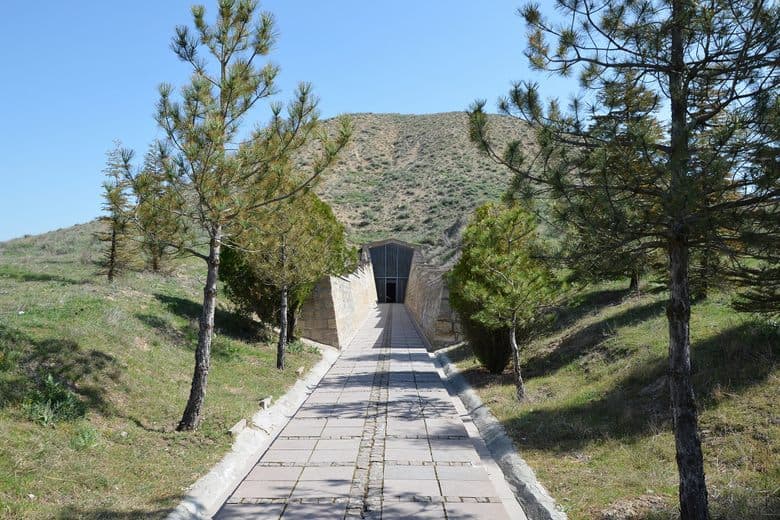
The Midas Tumulus, also known as Tumulus MM (Midas Mound), is a monumental burial mound located near the ancient city of Gordion, the former capital of Phrygia. Standing at nearly 175 feet tall, it is believed to be the burial site of King Gordias, father of the legendary King Midas, dating back to the mid-8th century BC. Its significance lies in the remarkably preserved wooden burial chamber within, which is considered the oldest standing wooden structure in the world, offering a unique window into ancient Phrygian funerary practices and advanced carpentry.
Visitors consistently praise the unique experience of walking through the long, somewhat cramped tunnel that cuts through the mound, leading to the ancient wooden beams of the chamber. While the burial chamber itself cannot be entered, a protective fence allows for a partial view of its exterior, which many find astonishingly well-preserved despite millennia under rubble and dirt. Reviewers often highlight the sense of awe and connection to ancient history that this site evokes, especially when combined with a visit to the nearby Gordion Museum.
To make the most of your visit, allocate about 1-2 hours for the tumulus and the adjacent museum. It's advisable to wear comfortable shoes as there is some walking involved, including through the tunnel. The site is best visited during cooler months or early mornings/late afternoons in summer to avoid the heat. There are no specific amenities at the tumulus itself, so bring water and any other necessities. Combining this visit with the Gordion Museum is highly recommended, as the museum houses artifacts found within the tumulus and provides crucial context.
The Midas Tumulus is located in Yassıhüyük, near Ankara. It is best reached by private car or taxi from Ankara, as public transport options directly to the site are limited. The tumulus is situated across the road from the Gordion Museum, making it easy to visit both consecutively. Parking is available at the museum.
A common complaint among visitors is the inability to enter the burial chamber itself, with some finding the view from behind the fence less impactful than anticipated. To mitigate this, manage your expectations and focus on the historical significance and the engineering marvel of the tunnel and the visible wooden structure. Reading up on Phrygian history before your visit can also greatly enhance the experience.