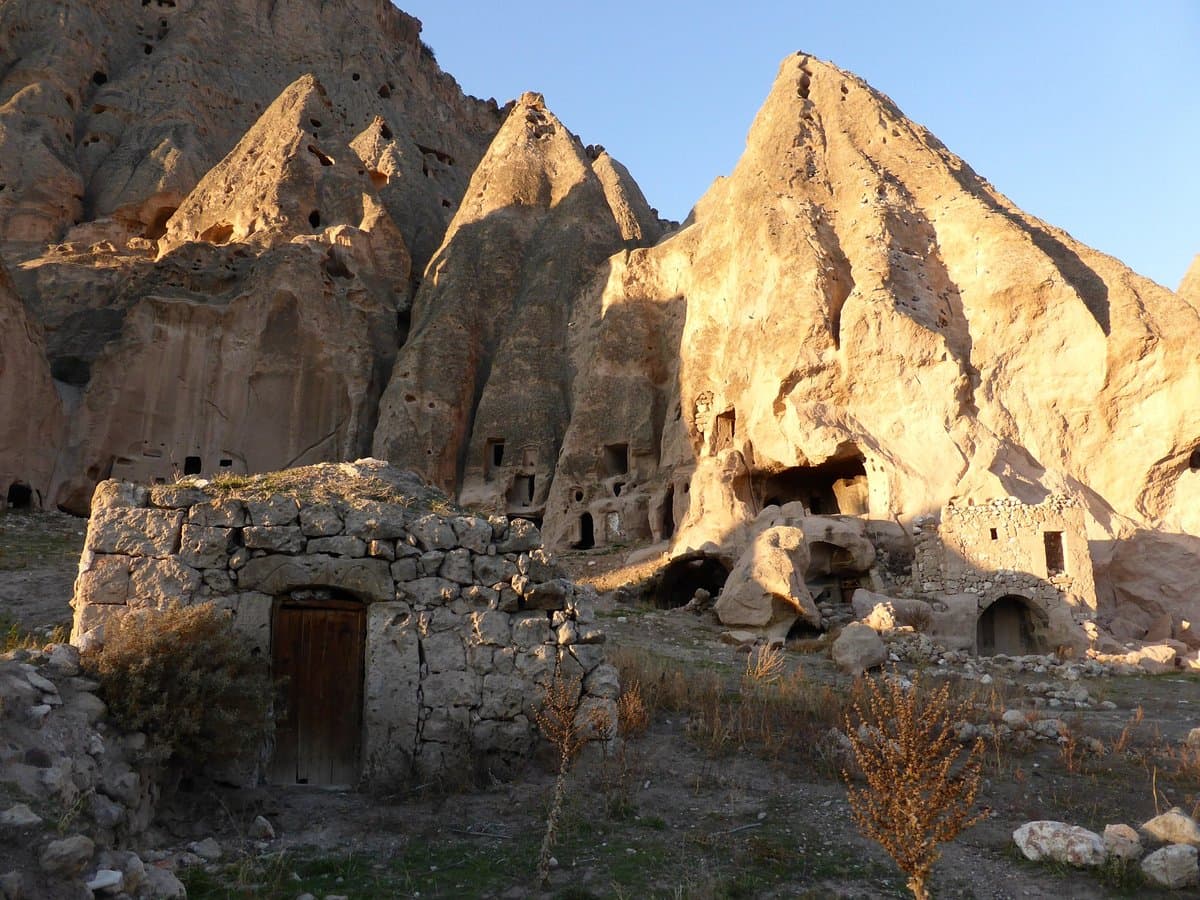
Selime Monastery is the largest rock-cut monastery in Cappadocia, an awe-inspiring complex carved into a volcanic rock formation. Dating back to the 8th or 9th century, it served not only as a religious center during the Byzantine period but also as a fortress against invasions and a caravanserai along the Silk Road. Its multi-level structure includes a cathedral, churches, chapels, kitchens, and living quarters, offering a profound insight into the early Christian communities and their ingenuity.
Visitors frequently highlight the monastery's impressive scale and the sense of adventure it provides. Many appreciate that it is significantly less crowded than the Göreme Open Air Museum, allowing for a more tranquil and immersive exploration. Reviewers often mention the well-preserved nature of the complex, with some areas still showing original murals and intricate carvings. The opportunity to freely wander through tunnels, climb between floors, and discover various rooms, including a kitchen with a large chimney and a winery, is a consistent point of praise. The panoramic views from the top are also a major draw, with many describing them as breathtaking.
To make the most of your visit, wear sturdy, non-slip shoes, as paths can be steep and slippery, especially after rain. Bring water, particularly if visiting in summer, as the climb can be strenuous. While a guide can enhance the historical understanding, many visitors feel comfortable exploring independently, as the circuit is generally well-designed. Allow at least 1-2 hours to fully explore the monastery, though some suggest more time for deeper immersion. Combining the visit with the Ihlara Valley is highly recommended, as the entrance ticket is often valid for both. Consider visiting in the late afternoon for fewer crowds and beautiful light.
Selime Monastery is located at the end of the Ihlara Valley, near the town of Selime. While public transportation options are limited, it is a common stop on the 'Green Tour' from Göreme, which typically includes transport and a guide. If driving, visitors advise parking in the dirt area rather than the cobblestones near the market to avoid potential parking scams. The monastery is easily identifiable from the main road, opposite a cemetery. The climb up to the monastery starts from the backside of the market, up the cliff.
A common complaint revolves around aggressive individuals attempting to charge for parking or offer unsolicited guide services, sometimes leading visitors through less significant areas. To mitigate this, be firm but polite, and park in designated areas or follow the advice of other travelers regarding free parking spots. Some visitors also note that the frescoes are damaged, which can be disappointing if expecting pristine artwork; however, the architectural marvel itself remains the primary draw.