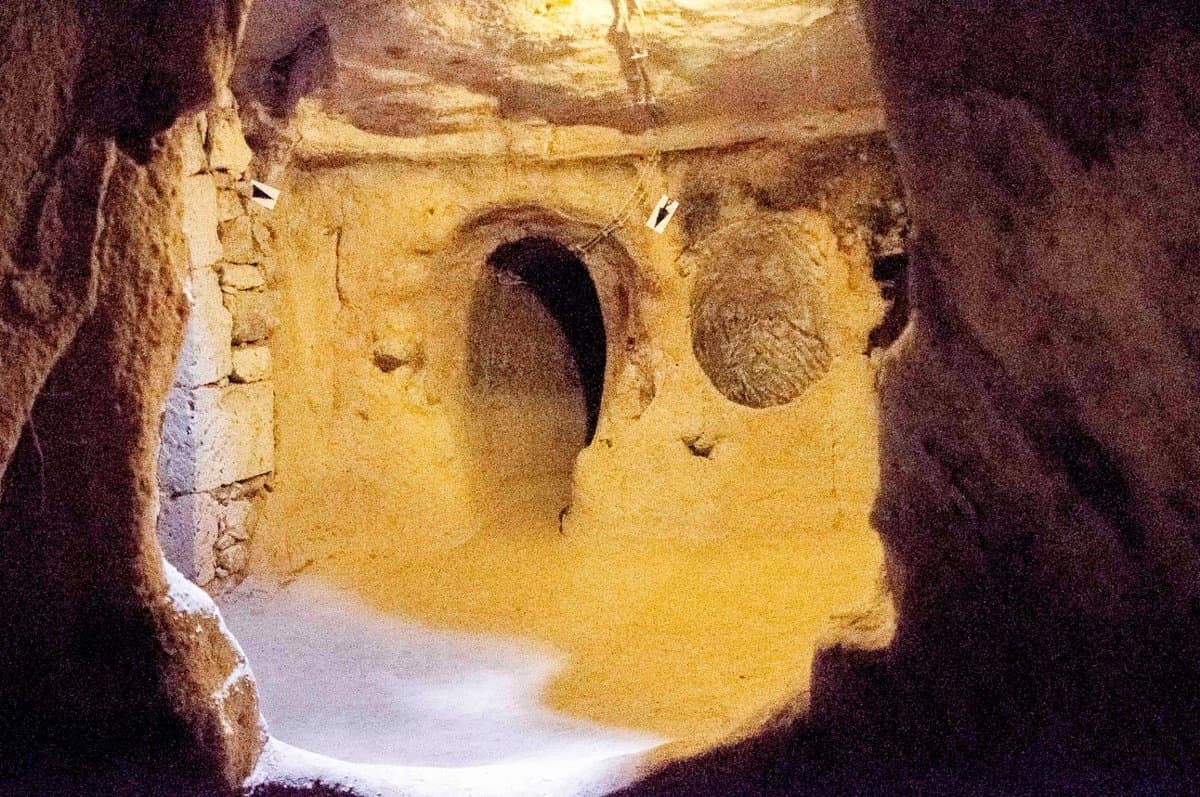
The Saratli Kirkgoz Underground City is one of over 200 subterranean settlements in the Cappadocia region, serving as a refuge for early Christians and local populations fleeing invaders. Carved deep into the earth, this ancient city features multiple levels of tunnels, living quarters, storage areas, and ingenious defensive mechanisms like large rolling stone doors. It offers a tangible connection to the resourcefulness and resilience of its former inhabitants.
Visitors consistently praise Saratli Kirkgoz for being less crowded than other major underground cities, allowing for a more peaceful and immersive experience. Many reviewers highlight the well-preserved nature of the city and the intriguing details, such as the ventilation systems and the massive stone wheels used to seal off passages. The historical narrative, often explained by guides, about how people and their animals lived and hid here, deeply resonates with visitors. However, some note that the visit can be relatively quick, often less than an hour, and only a few of its seven levels are open to the public.
For a comfortable visit, wear sturdy shoes as the ground can be uneven and steps are steep. Bringing a small flashlight can be helpful for exploring darker corners, though the main paths are lit. Visitors recommend doing some research beforehand or hiring a guide to fully appreciate the historical context. The site is not ideal for those with mobility issues or severe claustrophobia due to narrow passages and steep inclines. Many reviewers suggest combining this visit with other nearby attractions in the Aksaray region, as it's a relatively quick stop.
Saratli Kirkgoz is located on Ataturk Bulvari in Aksaray. While specific public transport details are not widely mentioned in reviews, it's typically visited as part of an organized tour or by private vehicle. It's often a stop for smaller tour groups en route to other Cappadocian sites. Parking is usually available near the entrance. The site is situated in a small village, and visitors often encounter local women selling handmade dolls and souvenirs outside.
The primary complaint revolves around the cramped spaces and steep steps, making it challenging for individuals with mobility impairments or severe claustrophobia. To mitigate this, consider your physical comfort level before entering. While the visit can be short, focusing on the historical significance and imagining life within these confines can enhance the experience.