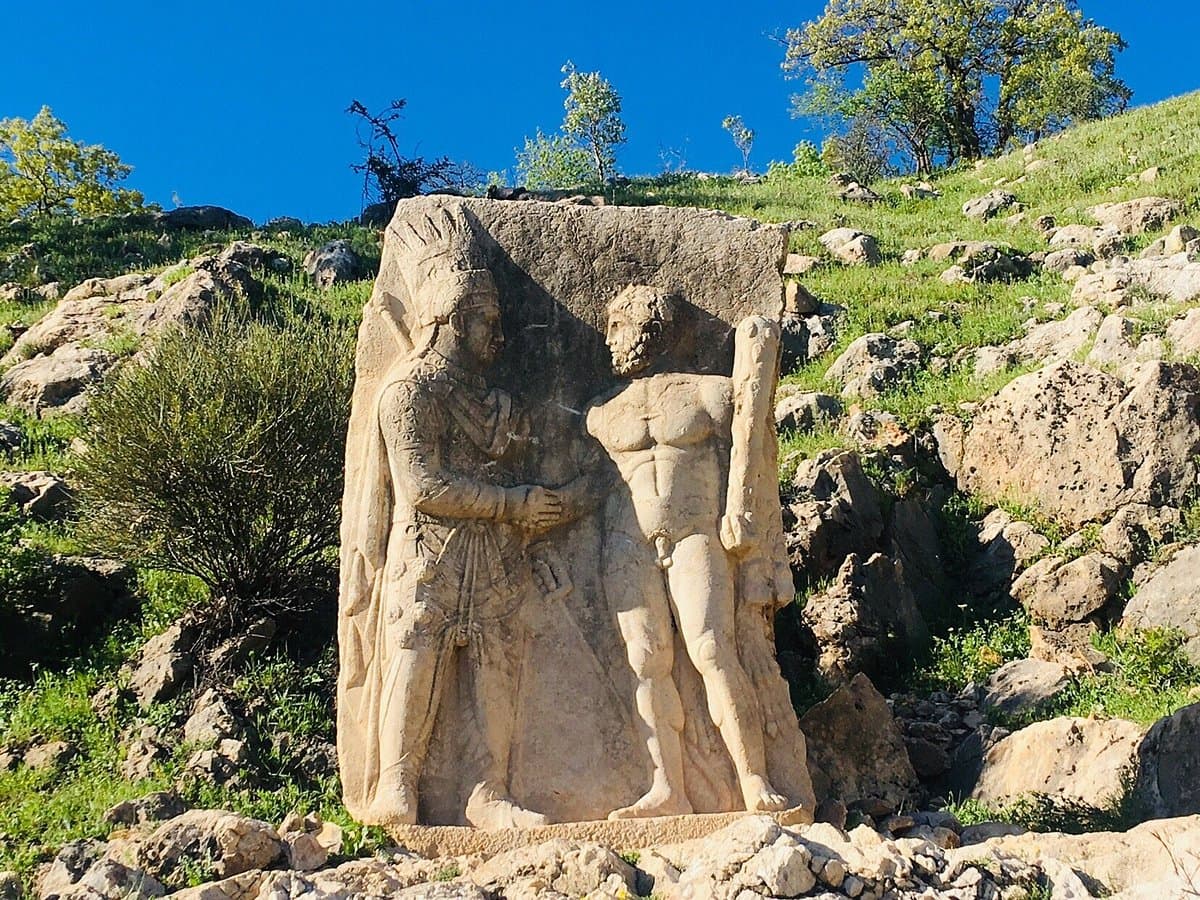
Arsemia, also known as Arsameia on the Nymphaios, served as the summer capital and hierothesion (sacred burial complex) for the Commagene Kingdom, founded by Antiochus I. It is particularly significant for its well-preserved rock reliefs, including one depicting Heracles shaking hands with King Mithridates, and for housing the longest Greek inscription found in Anatolia. The site offers a unique blend of historical intrigue and natural beauty, providing insights into the Commagenian royal cult and their architectural prowess.
Visitors consistently praise the breathtaking views of the surrounding river valley and the tranquil natural setting. Many highlight the impressive rock reliefs and the monumental Greek inscription as the main draws. The underground tunnels, some reportedly extending over 50 meters, also capture the imagination of those who explore them. Reviewers often mention that Arsemia, despite its limited ruins, can be as captivating as, or even more so than, Mount Nemrut for some, due to its serene atmosphere and distinct historical elements.
To make the most of your visit, allocate about 1.5 to 2 hours. The best time to visit is during spring (April and May) or autumn (October) when the weather is mild and the natural scenery is at its most vibrant. Wear comfortable walking shoes as there is a fairly steep, rocky climb from the car park to the main ruins. Bring water, especially on hot days, as facilities are limited. While the site is generally considered safe, some tunnels can be dark and may require a flashlight if you wish to explore them thoroughly. Visitors suggest combining this visit with nearby attractions like the Cendere Bridge and Yeni Kale (Old Kahta Castle) to create a fuller day trip.
Arsemia is located near Kahta and is typically visited as part of a tour to Mount Nemrut. The site is within the Mount Nemrut Dagi National Park, and there is an entrance fee that usually covers both Arsemia and Nemrut Dagi. The road leading to Arsemia can be steep and winding, with some reviewers noting it can be rough, especially after heavy rains. While accessible by car, some visitors on self-drive tours found the road challenging. Many tour operators include Arsemia in their Nemrut itineraries, which can be a convenient way to reach the site. The car park is at the base of the hill, requiring a walk up to the ruins.
A common complaint among visitors is the lack of extensive ruins and limited informational signage on-site. To mitigate this, consider hiring a local guide or researching the site's history beforehand to fully appreciate the significance of the remaining structures and inscriptions. Some visitors also found the climb challenging on hot days; planning your visit for cooler parts of the day or year can significantly improve the experience.