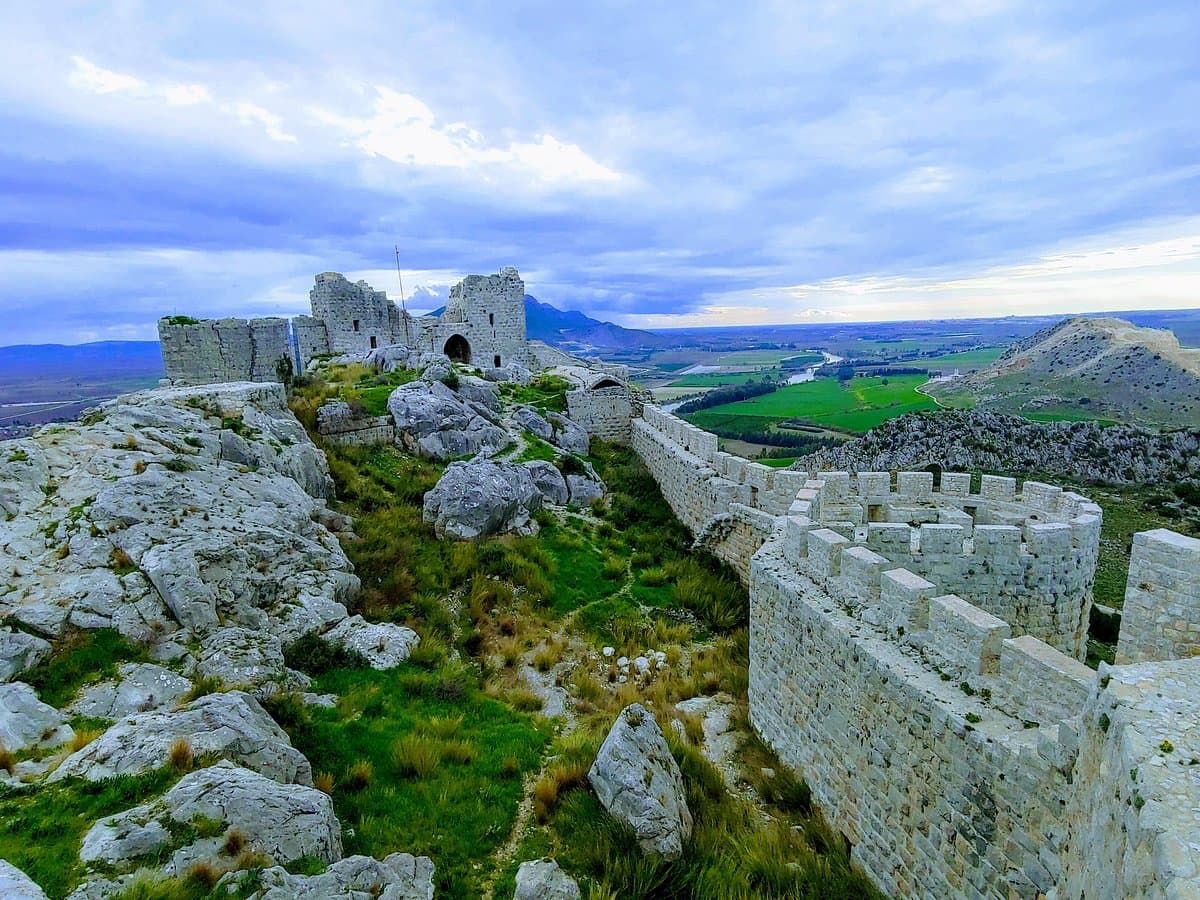
Yilankale, often referred to as the 'Snake Castle,' is a significant medieval Armenian fortress dating back to the Kilikian Armenian Kingdom, likely built by King Levon I. Strategically located on a hill overlooking the Ceyhan River and the vast Cilician plain, it served as a communication point with other castles in the region. Its historical importance and the impressive scale of its ruins make it a compelling site for history enthusiasts.
Visitors consistently highlight the spectacular panoramic views from the castle, describing them as "breathtaking" and "excellent." Many appreciate the sense of history and the opportunity to explore a large, well-preserved fortress. However, the challenging ascent is a recurring theme in reviews. While there are some paved sections and wooden steps near the beginning, the path quickly becomes rough, stony, and steep, with loose rocks and bushes. Several reviewers emphasize that the climb is not suitable for people with limited mobility, small children, or those unprepared for a strenuous hike. Despite the difficulty, the consensus is that the effort is "well worth it" for the views and the experience.
To make the most of your visit, wear sturdy, closed-toe shoes with good grip – sandals or flip-flops are strongly discouraged. Bring plenty of water, especially during warmer months, as there are no facilities on the castle itself. While some parts of the castle are undergoing restoration, visitors can still explore much of the site. Plan to spend about 1-2 hours exploring the castle and enjoying the views. The best time to visit is in the morning or late afternoon to avoid the midday heat and harsh sun, which can make the climb more difficult.
Yilankale is located approximately 40 km from Adana city center and about 13 km from Ceyhan. The most common way to reach it is by car. The road leading up to the castle is described as narrow and made of pebbly stone in some sections. There is accessible parking near a café at the base of the main ascent. Be aware that a barrier on the road closes overnight (around 4 PM in winter, 6 PM in summer) and reopens at 9 AM. There is no entrance fee, making it a budget-friendly historical excursion.
The primary complaint revolves around the condition of the path to the castle, which is often described as unmaintained, rocky, and steep. To mitigate this, ensure you are physically prepared for a hike and wear appropriate footwear. Some visitors also mention that while the exterior views are magnificent, there isn't a lot to see inside the castle's remnants, which might disappoint those expecting fully restored interiors. Focus on the historical atmosphere and the incredible vistas rather than expecting elaborate indoor exhibits.